
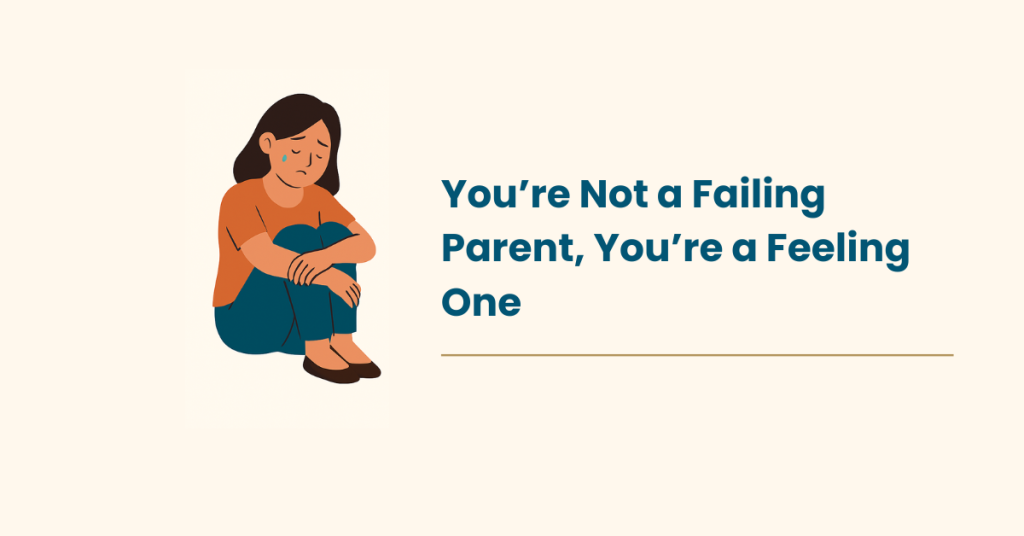
Some days, your child melts down before breakfast. Other days, you snap over something small and feel guilty for hours.
You wonder…
“Why does this feel so hard?”
“Am I getting it all wrong?”
“Am I failing as a parent?”
But here’s the truth:
You’re not a failing parent. You’re a feeling one.
And that’s not a weakness. That’s your superpower.
At sharasa, we’ve worked with hundreds of parents navigating this exact space, between pressure and presence, performance and peace. What they all need most is not another checklist.
They need mindful parenting tips that remind them: parenting isn’t about being perfect, it’s about being human.
Why Feeling Isn’t Failing
We live in a world that celebrates parenting “results.” Sleeping through the night. Potty trained before 2. Polite, obedient, high-performing children.
But mindful parenting flips that script.
Your frustration isn’t failure.
Your tears aren’t weakness.
Your guilt isn’t proof you’re bad, it’s proof that you care deeply.
Parenting is not a performance.
It’s a relationship.
And like any real relationship, it’s filled with emotion, especially in the early years, when your child is still building their brain, and you’re still building your confidence.
5 Mindful Parenting Tips (For Feeling Parents)
1. Breathe Before You Blame
Pause before reacting, not just to your child’s behavior, but to your own inner critic.
Say to yourself: “I’m feeling something big. That’s okay. Let me slow it down.”
This simple pause changes everything.
2. Validate First, Correct Later
Before rushing to fix, pause to name their emotion:
“You’re upset because I turned off the cartoon, right?”
Validation creates connection, and connection creates cooperation.
3. Say What You Feel
Instead of pretending you’re calm, try:
“I’m feeling really tired right now. I need a moment.”
Kids don’t need perfect parents. They need present ones.
4. Create Rituals, Not Rules
Rather than saying, “Go to bed now,” try a rhythm:
→ Brush teeth
→ Quiet song
→ 2 deep breaths
This creates calm through safety, not force.
5. Acknowledge the Wins (Even Small Ones)
Did your child calm faster today?
Did you pause before yelling?
Celebrate it. Small shifts = big growth over time.
At sharasa: Emotional Parenting Is Normalized
In sharasa classrooms, we don’t just handle behavior, we listen to it.
- A tantrum isn’t punished. It’s understood.
- Teachers name emotions, not just actions.
- Routines are rhythmic, sensory, and emotionally safe.
- Cultural rituals like bhajans, storytelling, and breathwork help regulate emotions, without force or pressure.
Because when children feel emotionally safe, they cooperate more, connect more, and explore more.
We don’t train behavior.
We nurture understanding.
You Don’t Have to Do It Alone
Feeling everything deeply is part of parenting.
But doing it alone? That’s optional.
That’s why we created the sharasa Parent Community, a calm, expert-guided space on WhatsApp for parents of kids aged 1–6.
Because sometimes, what you need most is a space where other parents say:
“Me too.”
Inside the community, you’ll get:
1. Guidance on tantrums, emotions & routines
2. Monthly parenting workshops
3. Trusted resources (no information overload)
4. Culturally rooted parenting tools
5. A non-judgmental, emotionally safe space
If you’ve ever wondered, “Am I doing this right?”, this space is for you.
🔗 Join the sharasa Parent Community →
FAQs – For Parents Who Feel Too Much
Q: I feel overwhelmed every day. Is that normal?
Yes. You’re not failing, you’re aware. Mindful parenting starts with noticing what you’re feeling.
Q: How do I stay calm when I’m exhausted?
You don’t need to be calm all the time. Just start by pausing before reacting. That’s mindfulness in action.
Q: Isn’t parenting supposed to feel joyful?
It is, and it also feels tiring, triggering, and uncertain.
Joy and struggle can co-exist. That’s why support helps.
Q: How do I know if I need parenting help?
If you’re asking this question, you’re ready. Support isn’t weakness, it’s wisdom.
Q: Will this approach work for every child?
Yes. Emotional awareness and connection are universal needs, especially in ages 1–6.
Final Thought
You’re not a failing parent.
You’re just a deeply feeling one.
And that’s your strength.
Children don’t need you to suppress your emotions, they need you to show how to navigate them. And for that, you don’t need to be perfect.
You just need to stay connected, to your child, and to yourself.
Ready to parent with calm, clarity, and culture?
Book Your Free Child Assessment Session
Discover how sharasa nurtures emotional growth, confidence, and secure behavior in children, through conscious connection and cultural care.
Locations: Indira Nagar & College Road, Nashik
Visit : sharasa.in