When most people think of early education, they think of ABCs, numbers, and worksheets. But what if we told you that something even more important comes before all that?
At sharasa, we believe the true foundation of learning is not academic – it’s emotional. Your child’s ability to feel, express, and regulate emotions forms the base for how well they’ll learn, connect, and grow for the rest of their lives.
Why Emotional Growth Should Come First
Before your child can recognize letters, they need to recognize emotions. Emotional growth means your child is learning how to understand themselves and others, to manage big feelings, and to feel safe in their world.
And why does that matter? Because:
- A child who feels calm is ready to focus.
- A child who feels safe is open to learning.
- A child who feels heard is more confident to ask and try.
That’s why at sharasa, emotional development comes before formal academics – intentionally, not accidentally.
Backed by Science and Culture
Modern research agrees with what Indian wisdom has said for centuries:
The first six years are everything. This is when:
- 90% of the brain develops
- Core emotional patterns are formed
- Beliefs about safety, love, and learning take root
In these early years, your child’s emotional wiring is shaped by the tone of your voice, the safety of their space, and the consistency of your response.
To dive deeper, explore: Child Development in the First 6 Years: What Science and Vedas Agree On
Why Emotions Unlock Real Learning
It’s a myth that emotions and academics are separate.
In truth, emotional growth fuels academic learning. When children can regulate their emotions, they can focus, listen, and persist—even when learning gets tough. Without emotional safety, even smart children may shut down, withdraw, or act out.
Here’s what emotional strength enables in the classroom:
- Confidence to try without fear.
- Attention that lasts through the task.
- Social awareness and teamwork.
- Resilience when mistakes happen.
Curious how we embed this into daily life at sharasa? Don’t miss:
5 Hidden Rituals That Build Character: The sharasa Way
How We Nurture Emotional Growth at sharasa
Our programs, Parnam and Pushpam, are built with emotion at the center. Each day begins with grounding rituals like storytelling, movement, and sensory play.
We don’t just “talk about feelings.” We help children:
- Name emotions in simple language.
- Use play to release frustration.
- Practice empathy with peers.
- Feel seen and heard, even during difficult moments.
We also coach parents to do the same at home – because emotional learning doesn’t end in the classroom.
A Simple Emotional Practice You Can Try Today
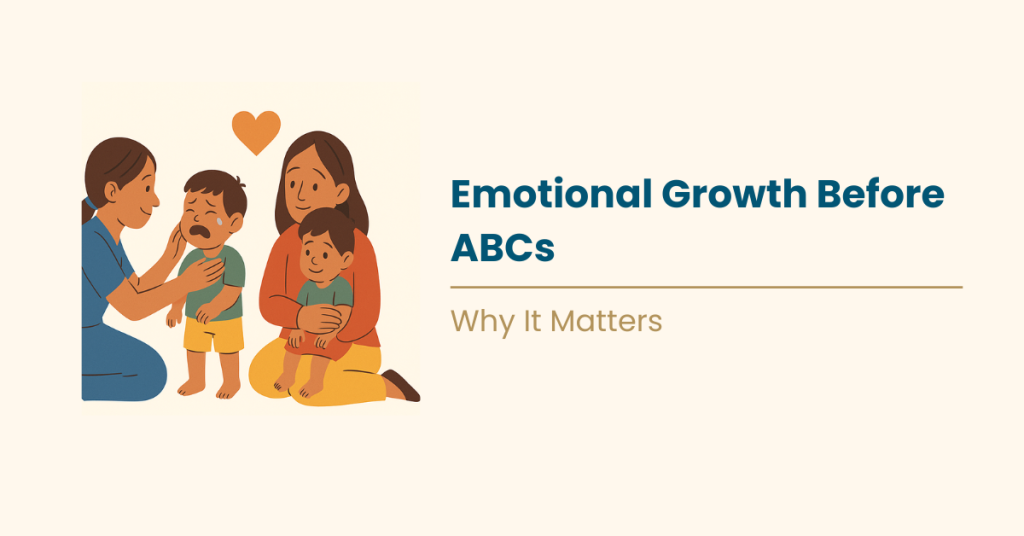
When your toddler cries or yells, pause before reacting.
Say calmly:
“You’re feeling really upset. I’m here.”
This small sentence offers something huge: emotional safety.
Over time, it teaches your child that their feelings are okay, and manageable.
Ready to Check In on Your Child’s Emotional Growth?
Most parents track ABCs, numbers, and speech – but very few know how their child is growing emotionally.
At sharasa, we offer a Free Assessment Session that gives you:
- Insight into your child’s emotional stage.
- Clarity on how to support them.
- Real tools based on Indian values and developmental science.
📍 Book your free Assessment session here
And start your parenting journey with heart, not hurry.