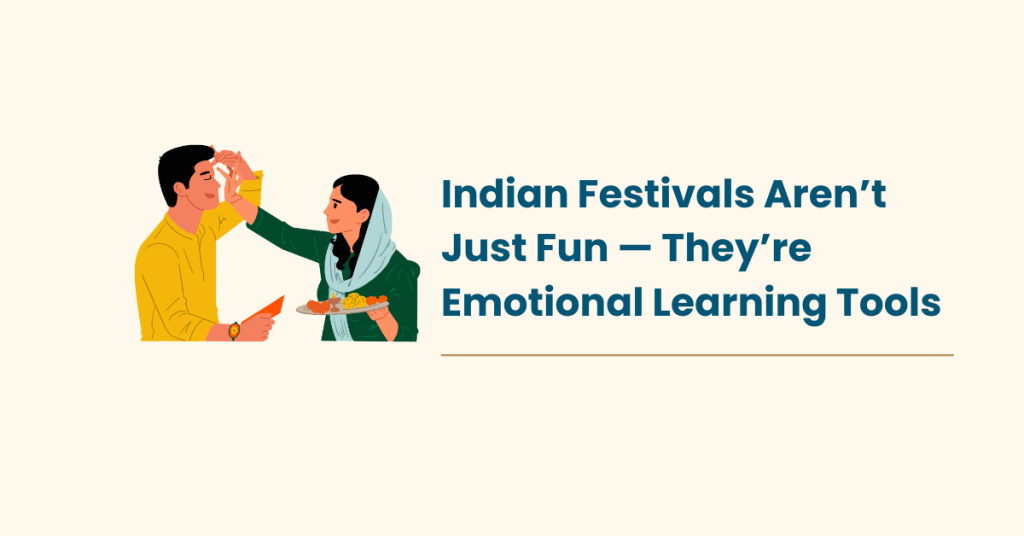
Indian Festivals as Emotional Learning Tools
When we think of Indian festivals, we imagine colors, music, delicious food, and joyful gatherings. But for young children, these celebrations are much more than just fun days off school. Festivals act as emotional learning tools, shaping empathy, gratitude, patience, and a deep sense of belonging.
At sharasa, we integrate festivals into our learning journey not just as events to celebrate, but as opportunities to help children develop emotional intelligence through traditions, rituals, and shared experiences.
Why Festivals Matter in Emotional Learning
Modern parenting often focuses on academics, but science and culture agree – emotions shape a child’s future more than any single subject. Here’s how Indian festivals naturally strengthen emotional growth:
1. Building Empathy and Compassion
When children help prepare sweets for neighbors, tie rakhi to siblings, or share prasad in the temple, they experience giving before receiving. This nurtures kindness and compassion in a way no lecture can.
2. Strengthening Family Bonds
Festivals bring grandparents, cousins, and relatives together. For a child, these repeated interactions create a sense of emotional safety and connection — essential for secure attachments.
3. Developing Patience and Gratitude
Waiting for puja to begin, standing in line for blessings, or preparing for the big day teaches children patience. They also learn to appreciate traditions passed down through generations.
4. Creating a Sense of Belonging
Wearing traditional clothes, singing devotional songs, and learning stories of gods and goddesses give children cultural identity. This identity acts as an emotional anchor in a fast-changing world.
5. Encouraging Mindful Joy
Festivals teach children that joy doesn’t come only from toys or gadgets — it can come from connection, rituals, and shared meaning.
How sharasa Uses Festivals for Emotional Growth
At sharasa, our celebrations go beyond decoration and sweets. We design them as learning environments:
- Storytelling Circles: Before every festival, children hear age-appropriate stories that explain the “why” behind the celebration.
- Sensory Learning: From rolling ladoos to drawing rangoli, festivals engage all senses – enhancing both brain development and emotional memory.
- Role Play & Drama: Kids perform short skits or songs related to the festival, building confidence and expression.
- Community Sharing: We involve parents in activities, strengthening the parent-child emotional bond.
Examples of Emotional Learning Through Indian Festivals
- Rakshabandhan → Teaches love, respect, and protection.
- Janmashtami → Nurtures joy, devotion, and creativity.
- Diwali → Inspires hope, gratitude, and generosity.
- Ganesh Chaturthi → Encourages eco-consciousness and community spirit.
Why Emotional Learning Through Festivals Works So Well
Children learn best when they are emotionally engaged. Festivals bring together:
- Rituals (create security)
- Stories (teach values)
- Sensory experiences (make lessons stick)
- Social connection (build empathy and trust)
This powerful combination makes emotional lessons last a lifetime.
Tips for Parents: How to Use Festivals as Emotional Learning Tools
- Involve your child in preparations – cooking, decorating, or making gifts.
- Share stories and meanings in simple language.
- Model gratitude by thanking family, neighbors, and helpers.
- Create small rituals that repeat every year.
- Ask reflective questions: “What did you enjoy most today?” or “How do you think others felt when you gave them sweets?”
sharasa’s Takeaway
At sharasa, we believe emotions are the foundatio of education. By making festivals part of everyday learning, we give children the tools to be not just academically capable, but emotionally wise and culturally rooted.
Festivals remind us and our children – that joy, gratitude, and kindness are worth celebrating every day.
FAQs on Indian Festivals & Emotional Learning
Q1: How do Indian festivals help with emotional development in children?
A1: Festivals provide opportunities for empathy, gratitude, patience, and cultural identity – all essential for emotional intelligence.
Q2: Can young children really understand the meaning of festivals?
A2: Yes! Even toddlers can grasp simple stories, rituals, and the joy of giving when taught in an age-appropriate way.
Q3: How can parents make festivals more meaningful for kids?
A3: Involve children in preparations, explain traditions, and encourage them to participate actively instead of just watching.
Q4: What is sharasa’s approach to festival celebrations?
A4: We combine cultural rituals with storytelling, sensory activities, and parent involvement to create holistic learning experiences.
Want your child to grow emotionally strong and culturally connected?
Book a Free Child Assessment Session today.
www.sharasa.in | +91 99605 25593
Location: Indira Nagar, Nashik & College Road, Nashik