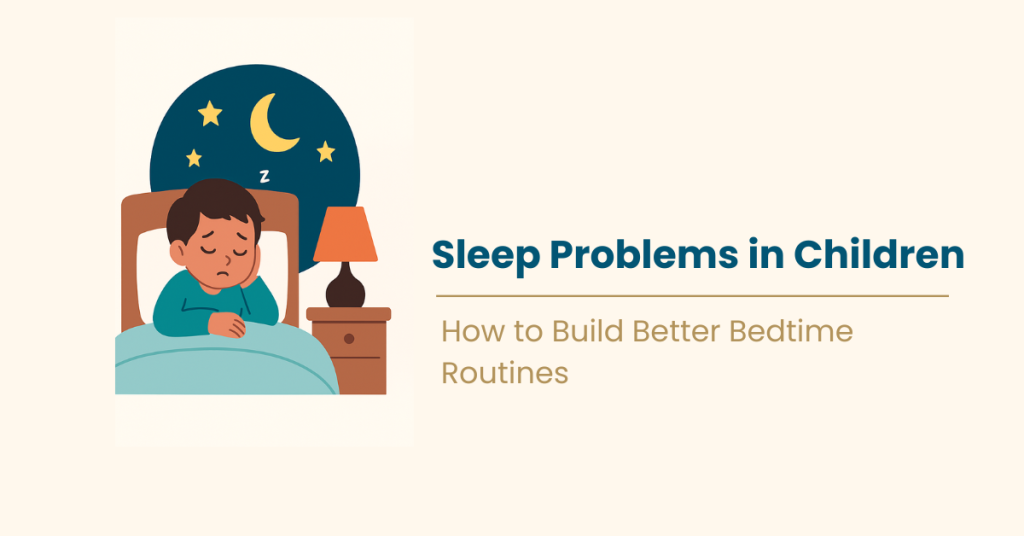
Why Sleep Problems in Children Matter
Sleep problems in children are more common than most parents realize. Many families in Nashik share stories of bedtime battles, restless nights, or children waking up multiple times. When sleep is disrupted, it doesn’t just leave a child cranky the next morning, it also affects learning, attention, mood, and even immunity.
At sharasa, we see that healthy sleep is just as important as good nutrition or play. Children between 0–6 years need 10–14 hours of sleep in a 24-hour cycle depending on their age. Yet with busy family routines, screens, and overstimulation, restful sleep often takes a back seat. The good news is that with gentle adjustments, parents can help their child build bedtime rhythms that bring calm and balance.
Common Causes of Sleep Problems in Children
1. Irregular routines
When bedtime shifts every day, children find it harder to know when to wind down. Their bodies thrive on rhythm.
2. Screen exposure
TV, mobile, or tablet use before bed stimulates the brain and delays melatonin production, making it tough for kids to settle.
3. Overstimulation before sleep
Rough play, sugary snacks, or too many activities late in the evening keep children alert when their bodies need rest.
4. Separation anxiety
Especially in toddlers and preschoolers, the fear of being apart from parents can make bedtime stressful.
5. Medical or emotional factors
Allergies, colds, nightmares, or changes at home (like a new sibling) can also affect a child’s sleep patterns.
Recognizing the cause is the first step in addressing sleep problems in children.
How Bedtime Routines Help
Children feel safe when life is predictable. A bedtime routine is not just about going to bed – it’s a signal to the child’s mind and body that it’s time to slow down. With repetition, routines turn into habits, and habits turn into restful nights.
At sharasa, we encourage parents to see bedtime as a transition: a series of small calming steps that move children from the energy of the day into the quiet of night.
Practical Tips for Better Bedtime Routines
1. Keep consistent sleep and wake times
Try to put your child to bed and wake them up at the same time every day, even on weekends. This sets the body clock.
2. Create a calming pre-bedtime ritual
Start 30–40 minutes before sleep. This can include a warm bath, light massage, changing into nightwear, brushing teeth, followed by a bedtime story or lullaby.
3. Reduce screen exposure
Turn off all screens at least one hour before bedtime. Replace TV time with gentle play, storytelling, or music. This aligns with sharasa’s screen-free philosophy, where real connections matter more than digital ones.
4. Watch food and activity levels
Avoid heavy meals, sugar, or caffeinated drinks in the evening. Instead, offer light snacks like milk, fruit, or whole-grain biscuits if needed.
5. Use comfort objects
A soft toy, blanket, or dim night light can make children feel secure. This is especially useful for those experiencing separation anxiety.
6. Keep the sleep environment simple
A cool, dark, and quiet room is best. Too many toys or distractions in bed can delay sleep.
7. Model good habits
Children learn by watching. If they see parents following a calming routine, they are more likely to accept bedtime positively.
Supporting Parents Through the Transition
Even with routines, it’s natural for children to resist or test boundaries. Some nights will be smooth, others won’t. The key is consistency and patience. At sharasa, we remind parents that bedtime struggles are not signs of failure, they are opportunities to connect. Sometimes a few extra minutes of comfort or listening to a child’s worries makes all the difference.
When to Seek Guidance
If sleep problems in children continue for weeks despite routines, it may help to consult a pediatrician or child development specialist. Persistent issues like snoring, night terrors, or extreme resistance to sleep may point to underlying concerns.
sharasa also supports families through developmental assessments and counseling, helping parents understand if sleep challenges are part of a wider developmental need.
The Bigger Picture: Why Rest Matters
Restful sleep doesn’t just recharge the body. It helps children regulate emotions, focus during play or learning, and grow socially. In early childhood, when brain development is rapid, sleep is a silent teacher. It consolidates memories, strengthens learning, and nurtures resilience.
The routines you set today will influence not just how well your child sleeps, but how confidently they engage with the world tomorrow.
Helping Your Child Sleep Better with sharasa
Every family experiences sleep struggles at some point, but with patience and consistent routines, children can learn to rest peacefully. The Slow Childhood Advantage we talk about at sharasa applies here too, growth is not about rushing, but about creating calm, steady rhythms that support the whole child.If you’d like to learn more, visit sharasa at our College Road or Indiranagar centers in Nashik. You can also book a free assessment session to see how our holistic, screen-free approach can support your child’s development, including healthy sleep habits.